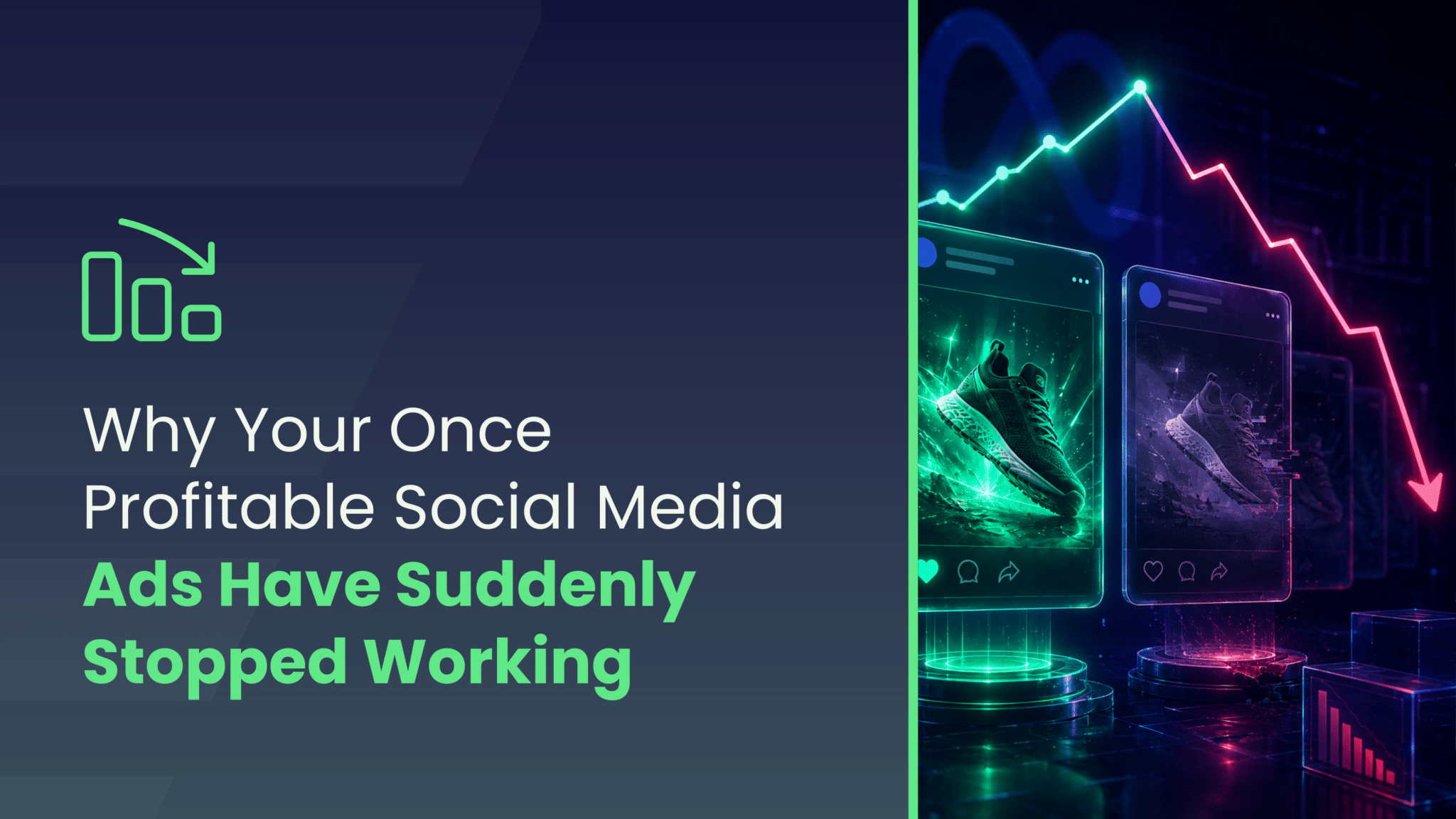

Facebook and Instagram ads often fail when you prioritize quantity over quality because the Meta Ads algorithm looks for the easiest path. This forces the system to hunt for cheap clicks from people who have no intention of buying.
You get a flood of bad leads that clog your system, waste your sales team’s time, and fail to generate real revenue.
Many business owners look at their ad dashboards and mistake basic activity for actual progress. They see a dropping Cost-Per-Lead (CPL) and assume their business is growing.
This is a major misunderstanding of how ad data works.
When your marketing strategy only focuses on raw volume, you create an internal crisis. Your sales team becomes a sorting facility for junk leads.
Your reps spend their valuable energy chasing disconnected phone numbers and automated form-fills instead of closing deals.
Data from HubSpot shows that 79% of marketing-generated leads never convert into sales, mostly because the leads were never properly filtered.
Even worse, 73% of those leads are never even contacted by sales representatives because they are assumed to be low-quality junk.
This is what happens when you build a system on a flawed foundation. You are not growing your business. You are just scaling your broken processes.
The Meta Ads Algorithm
To fix this bottleneck, you must understand exactly how the platform is incentivized to work. Meta runs a smart system or algorithm designed to follow your exact instructions.
The algorithm does not care about your profit margins. It only cares about hitting the goal you gave it at the lowest possible cost.
When you configure a Meta ads campaign to optimize only for lead volume, you tell the system to find the easiest forms to fill. The algorithm targets users who click every ad they see or fill every form they encounter.
This triggers a bad feedback loop inside the system. The algorithm quickly spends your budget on the lowest quality users.
Don’t do this:
- The Initial Signal: Meta identifies a cheap user and counts it as a successful sign-up.
- The Analysis: The system studies how that user acts online and builds a profile around their behavior.
- The Shift: The campaign automatically shifts your budget to hunt for millions of people just like them.
- The Failure: Your pipeline fills with bad leads, while serious buyers are ignored because they cost more to reach.
You must break this cycle by changing the information you feed into the system. Smart business leaders know that the quality of your data dictates the speed of your growth.
If you feed the algorithm garbage data, it will optimize to return higher volumes of garbage. True growth requires clean, high-quality data loops.
How Smart Friction Drives Real Growth
The standard marketing narrative tells you to remove all roadblocks from your customer’s buying path. You are told to reduce form fields, simplify steps, and make it effortless for a user to opt in.
That playbook works if you want to chase fake numbers. It completely fails if your goal is real business profit.
Smart business owners do not avoid friction. They build it into the system on purpose.
You must design intentional screening questions that weed out casual clickers and clear the way for serious buyers.
Make Verification Mandatory
If your sales team cannot reach a prospect, that prospect has zero actual value to your business. While running Facebook and Instagram ads, requiring phone number verification at the start immediately eliminates fake bots and bad contact details.
This single verification saves your sales team’s energy for real opportunities. It shifts your team from desperate chasing to actual closing.
Deploy Custom Qualification
Work with your sales leaders to pinpoint the exact traits of your best clients. Put two to five specific questions directly into your Facebook and Instagram ads forms or landing pages.
Ask about their budget, their timeline, or their biggest business problems. This forces the prospect to put in a little effort before earning the right to speak to your team.
Balance Data Volume with Meta’s Requirements
Your system still requires a steady stream of data to work right. Meta usually needs about 50 sign-ups per week per ad set to finish its initial learning phase.
Start by adding two critical qualification questions to your forms. Analyze your internal conversion rates, and then slowly add more screening questions until you find the exact balance between lead quality and Meta’s technical requirements.
The Infrastructure Blueprint: Systems Analysis
| Operational Component | The Quantity Model (System Failure) | The Quality Model (Real Growth) |
| Core Objective | Maximum lead volume at the lowest cost. | High-value sales pipeline and predictable returns. |
| Form Architecture | Minimal form fields. | Multi-step forms with smart screening questions. |
| Algorithmic Instruction | Optimized for quick, easy form-fills. | Optimized for deep sales milestones down the road. |
| Sales Floor Velocity | Reps burn out sorting through cold data. | Reps stay motivated talking to qualified buyers. |
| Feedback Mechanism | Blind optimization loop based on bad lead quality. | Closed-loop setup connecting database sales back to the ad account. |
Aligning Sales and Marketing with Hard Numbers
When an advertising campaign fails to produce revenue, it usually causes a big divide inside your company.
The marketing team points to high lead volume and cheap lead metrics then claims victory. The sales team points to their low conversion rates and claims the leads are garbage.
As a business leader, you must eliminate this emotional debate by enforcing a strict, clear definition of a Marketing Qualified Lead (MQL). Aligning Sales and Marketing is fundamental for a success lead generation strategy.
A lead is not valuable just because they downloaded a PDF or submitted a contact form. A real qualified lead must match the exact requirements your sales team needs to close a deal.
Once this clear standard is locked into your business framework, accountability becomes absolute.
- The Marketing Rule: If the marketing team fails to hit the agreed-upon lead target, it is a marketing problem. They must immediately fix their ad images, targeting settings, and screening questions.
- The Sales Rule: If marketing delivers the exact type of lead requested, but those prospects do not turn into buyers, it is a sales problem. Sales leaders must check their call speeds, script strategies, and follow-up systems.
Alignment is not about better communication. It is about establishing a single source of truth based on clean data. Revise Marketing Qualified Lead when necessary.
The Unfair Advantage of Sending Your Sales Data Back to Meta Ads
The top businesses in your industry are not running the same playbook as everyone else. While average businesses only watch basic metrics inside their Facebook and Instagram ads, market leaders use a much more powerful system.
They feed actual sales data from their customer database straight back into the ad platform.
[Raw Lead Sign-Up] ➔ [Database Marks Valid Lead] ➔ [Data Sent Automatically to Meta] ➔ [Meta Targets Real Buyers]
When a prospect moves from a raw lead to a qualified opportunity and finally to a closed customer, you must send that signal back to Meta. You can do this through Meta’s Conversions API or simple offline tracking tools.
By closing this loop, you stop training the algorithm to find cheap clicks. You start training it to find actual value for your business.
When the system understands exactly which profiles lead to real cash collected, it shifts its entire targeting strategy. It stops wasting your money on low-cost traffic that never buys.
It begins bidding aggressively on the high-value buyers your competitors are completely missing.
Stop judging your ad success by how many people enter your pipeline. Start judging it by how many of those people are actually qualified to buy from you.
Self Diagnosis: Your Meta Ad Infrastructure
Are you building a predictable revenue pipeline, or are you just paying Meta to spam your sales team with junk leads? Use these five questions to determine if your social ads are optimized for actual business growth.
5 Quick Questions:
-
- 🗹
Do you intentionally introduce “smart friction” (like mandatory phone verification and custom screening questions) into your lead forms, rather than just optimizing for the highest volume of cheap sign-ups?
- 🗹
Does your leadership team strictly define what constitutes a Marketing Qualified Lead (MQL) based on what the sales team actually needs to close a deal, rather than letting marketing claim victory over raw form fills?
- 🗹
Are you actively feeding closed-won sales data from your CRM back into Meta (via the Conversions API), training the algorithm to hunt for actual buyers instead of casual clickers?
- 🗹Do you view your sales professionals as high-level closers, rather than forcing them to act as a “sorting facility” that wastes energy chasing disconnected phone numbers?
- 🗹Does your marketing department prioritize the ultimate profit generated from a campaign, rather than celebrating vanity metrics like a dropping Cost-Per-Lead (CPL)?
- 🗹
The Verdict:
- 4–5 “Yes” answers: You have a Quality Pipeline Architecture. You understand that the algorithm is just a tool, and you are feeding it the clean, high-quality CRM data required to find serious buyers. By utilizing smart friction, you ensure your sales team only spends their time talking to qualified prospects.
- 0–3 “Yes” answers: You are caught in the Quantity Trap. Because you are optimizing purely for volume and a cheap CPL, Meta’s algorithm is actively hunting for low-intent “casual clickers.” You are not scaling your business; you are just scaling a broken process that will inevitably burn out your sales team.