
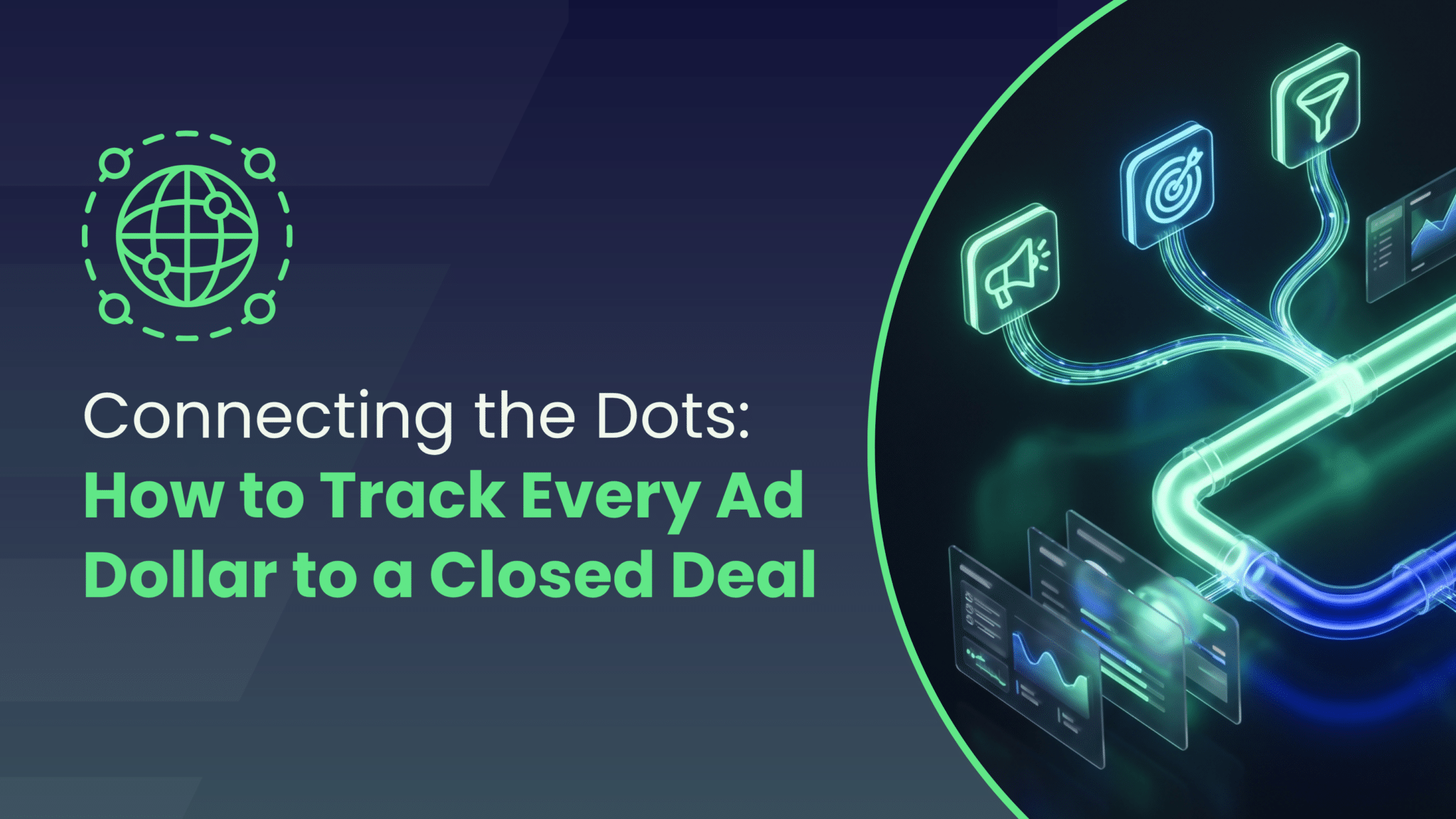
The “black box” of marketing spend is a primary source of friction between the CEO’s office and the marketing department. To track a digital lead to a signed contract, you must implement closed-loop reporting that syncs ad-platform UTM parameters with your CRM through every pipeline stage. By tagging the original source and every subsequent touchpoint, you move beyond surface-level lead counts and attribute specific revenue to the exact marketing dollar that generated the initial interest.
The Mirage of Manual Attribution
Most business leaders are making multi-million dollar decisions based on fiction. When you ask a lead, “How did you hear about us?” via a mandatory dropdown menu, you are asking for a guess, not a data point. Human nature is inherently biased toward convenience. If “Radio” is the first option in a list, a measurable percentage of leads will select it even if you have never purchased a single radio spot in the history of your company.
Studies on user behavior consistently show that forced-choice fields in contact forms lead to data decay. Users often select the path of least resistance just to access the “submit” button. Relying on these manual entries creates a distorted view of your marketing performance. It leads you to double down on channels that are actually underperforming while starving the invisible drivers of your growth.
The Attribution Trap: Why One View is Never Enough
Differentiating between a “first-touch” driver and a “re-engagement” spark is critical for budget optimization. In some industries, a single touchpoint is sufficient: a prospect sees an ad, clicks, and the sales team takes it across the finish line. However, in high-ticket or complex B2B sales, the journey is rarely linear.
You must evaluate attribution through multiple lenses:
- Original Source: This identifies where the contact was birthed. It is the metric for brand awareness and top-of-funnel efficacy.
- Re-engagement Touchpoints: If a lead went cold six months ago, a remarketing ad might be the catalyst that brought them back.
- Pipeline Stage Timing: Analyzing when a touchpoint occurred in relation to the deal stage (e.g., MQL to SQL) reveals which content actually moves the needle toward a signature.
Without comparing this to your historical data, you risk cutting “assisted” channels that are vital to the ecosystem. If you only look at the final click, you might stop funding the very ads that introduced the prospect to your brand in the first place.
Bridging the Data Chasm
The most common point of failure occurs in the handoff between the ad platform and the CRM. Many companies lose visibility the moment a user lands on their website. To prevent this “data leakage,” you must implement a rigorous technical infrastructure.
| Tracking Component | Purpose | Potential Failure Point |
| UTM Parameters | Identifies specific campaign and ad source. | Broken links or missing tags on ad sets. |
| Hidden Form Fields | Passes UTM data into the CRM silently. | Form updates that wipe out hidden field logic. |
| CRM Integration | Links the lead record to the sales opportunity. | Sales reps creating manual deals without linking the contact. |
| Visual Validation | Tools like Microsoft Clarity for session recordings. | Ignoring the user experience during the conversion. |
We advocate for a “trust but verify” approach. Initial campaigns should be manually reviewed to ensure that source attribution and resource tags are logging correctly. If the data is broken at the point of entry, every report you run for the rest of the year will be flawed.
The Cost Per Lead (CPL) Fallacy
Focusing on Cost Per Lead is a dangerous distraction. A low CPL often indicates a “generic resource” that attracts high volume but possesses zero intent to purchase. If you are generating leads for $10 that never convert, those leads are infinitely more expensive than $200 leads that close at a 50% rate.
To see the “Full Cycle,” you must work backward from the Cost Per Deal.
Evaluating the pipeline in stages allows you to identify exactly where the friction lies. If you see a high volume of Marketing Qualified Leads (MQLs) but a massive drop-off at the Sales Qualified Lead (SQL) stage, the problem isn’t your ad spend: it is your qualification process. You may need to add “friction” to your forms (such as price or timeline questions) to weed out tire-kickers. It is better to have ten high-intent conversations than one hundred dead-end leads.
The Uncomfortable Truth of Full-Cycle Tracking
When businesses finally “connect the dots,” they often face a sobering reality. Their existing KPIs are usually based on vanity metrics. Most leaders discover that their lead targets were inflated because they were chasing volume over value.
The most common discovery is a version of the 80/20 rule: approximately 10% of the ad spend is responsible for nearly 100% of the actual revenue. The remaining 90% of the budget is often being burned on “lead volume” that looks great in a monthly marketing report but contributes nothing to the bottom line.
True growth requires the courage to stop the “wasteful” spend, even if it means your total lead count drops. What matters is the signature on the contract, not the number of rows in your spreadsheet.
Self Diagnosis: Your Closed-Loop Attribution
Are you making multi-million dollar decisions based on verified data or human guesswork? Use these five questions to determine if your attribution model is capturing reality or creating a mirage.
5 Quick Questions:
-
- 🗹
Do you rely on automated, hidden UTM parameters to track ad sources, rather than just asking leads “How did you hear about us?” on a form? - 🗹
Can you definitively prove which specific ad campaign generated your last three “Closed-Won” deals, rather than just pointing to a spike in overall traffic? - 🗹
Do you track multi-touch attribution (original source + re-engagement touchpoints) to ensure you aren’t accidentally defunding your top-of-funnel awareness channels? - 🗹Do you regularly audit your CRM integrations to ensure there are no “data leaks” when a user moves from an ad click to a pipeline opportunity?
- 🗹Does your leadership focus on Cost Per Deal (CPD) and pipeline revenue, rather than being distracted by the vanity metric of a cheap Cost Per Lead (CPL)?
- 🗹
The Verdict:
- 4–5 “Yes” answers: You are a Full-Cycle Architect. You have successfully connected the dots, allowing you to confidently cut wasted ad spend and double down on the campaigns that actually drive revenue.
- 0–3 “Yes” answers: You are caught in the Attribution Trap. You are flying blind, making budgetary decisions based on vanity metrics and flawed manual tracking, which is likely starving your true growth channels.