The best way to use follow up ads to win high value clients is to match what you show to how interested each prospect really is. Cap how often people see you, lead with help and proof instead of repeated sales pitches, and stop the moment they convert. The goal is not to chase. It is to be remembered.
Follow up ads (also called retargeting or remarketing) show your ads to people who have already visited your website. Done well, they are the most efficient ads you will run. Done badly, they turn interest into irritation.
The Prospect Who Visited Once and Never Came Back
You know this prospect. They spent six minutes on your website. They even opened the pricing page.
Then they left.
So your ads followed them. Every day. Same image, same “Book a call” button, for three months.
They never booked. Worse, they now remember you as the brand that would not leave them alone.
Why Follow Up Ads Get Annoying
The problem is not the ads. It is the timing.
Research from LinkedIn’s B2B Institute and the Ehrenberg-Bass Institute shows that 95% of your potential buyers are not ready to buy today. They will be. Just not this week.
Yet the same research found that 96% of B2B marketers expected their ads to deliver the main effect within two weeks.
That is the mismatch. Businesses push for a decision most prospects are not ready to make, then push harder when nothing happens.
Treat the exact split as a guide, not gospel. The direction is what matters. The job of a follow up ad is not to force the sale. It is to make sure your name is the first one they think of when they are ready.
The Salesperson Test: How Often Is Too Often?
If a good salesperson contacted this prospect as often as your ads do, would they still be welcome?
Frequency should drop as time passes. These are starting points, not rules:
| Time since visit | How often they see you | What you are aiming for |
| Days 0 to 7 | Up to 2 times a day | Stay visible while interest is fresh |
| Days 8 to 30 | A few times a week | Build trust without crowding them |
| Days 31 to 90 | Once or twice a week | Be remembered, not pushy |
| After they convert | Never* | Protect the new relationship |
*Unless cross-selling
Match the window to your sales cycle. Around 90 days suits most businesses. Enterprise deals may justify longer.
Set frequency caps where the platform allows. Where it does not, control exposure through audience size and budget.
Rotate creative every few weeks. The same ad seen 40 times is not follow up. It is wallpaper.
Score the Intent, Not the Visit
Someone who studied your pricing page and someone who browsed your careers page are not the same prospect. Neither are an eight-minute visit and an eight-second one.
| What they did | Intent | What to do |
| Viewed pricing, abandoned a form, returned several times | Hot | Full sequence, highest frequency |
| Read case studies or service pages, viewed 2+ pages | Warm | Proof-led content |
| Read one blog post, left quickly | Cold | Light brand presence only |
| Visited careers page, stayed under 10 seconds, existing client or staff | Exclude | Do not follow at all |
Most CRMs (HubSpot is a common example) include lead scoring, which awards points for actions like these. Sync your scored lists to your ad platforms, and your audiences stay current automatically.
What to Show Them: Help, Prove, Invite
The most common mistake I see is one “Book a demo” ad shown to every visitor for six months. A better sequence:
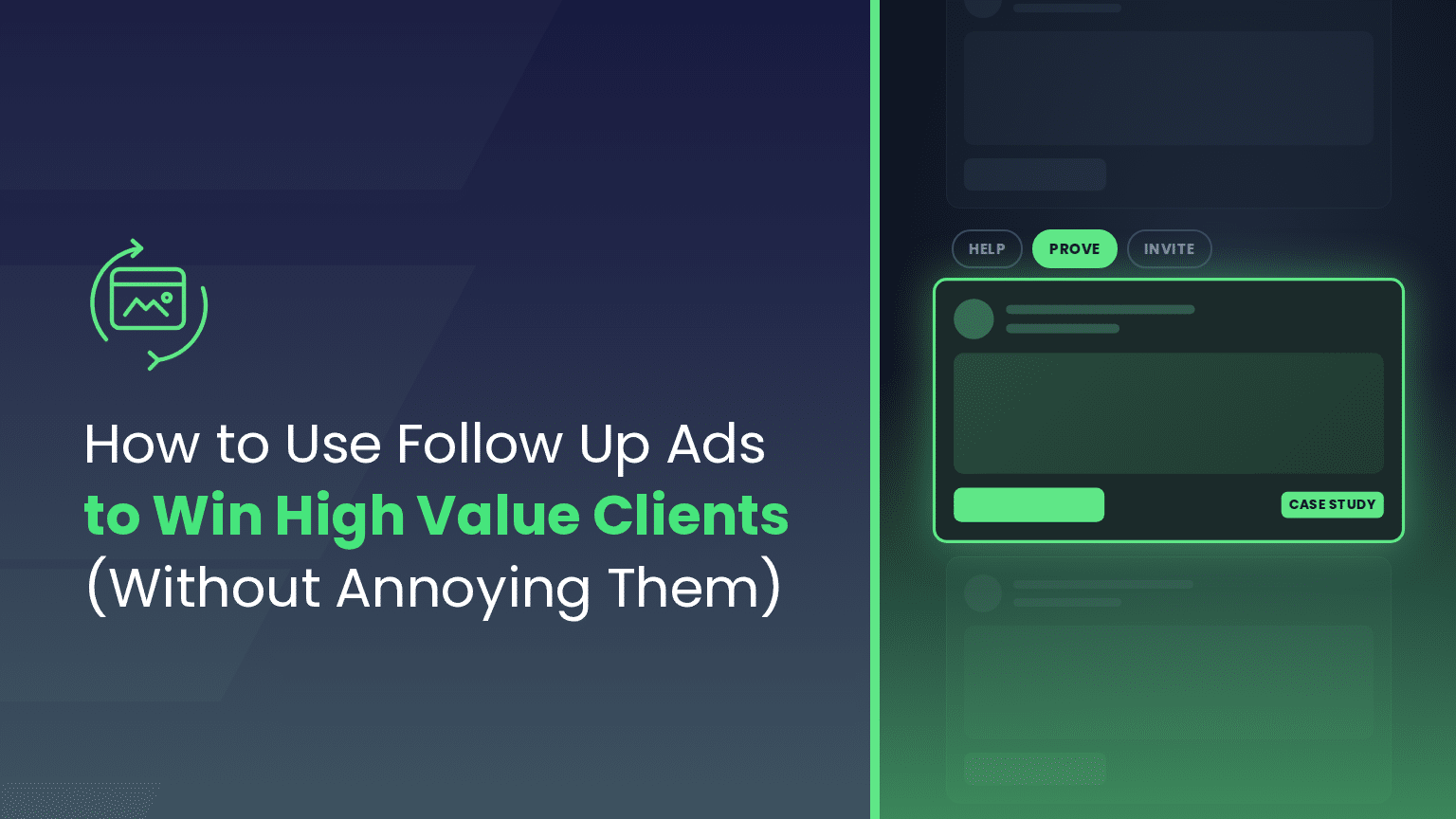
- Help (week one): Answer the question they came with. Read about pricing? Show a guide to what affects cost, not a discount.
- Prove (weeks two to four): Case studies, client results, and short “how it works” videos. This is where trust is built.
- Invite (ongoing, light): A soft next step, mixed with useful insight that keeps you remembered.
Avoid copy like “Still thinking about it?” It reminds people they are being watched.
The Sequence Is a Menu, Not a Ladder
Buyers rarely move in a straight line. Someone who abandoned a half-finished form may already know exactly what they need. They just want a solution, fast.
Walking them back through educational content wastes their time. Their intent tier decides where they start. Hot prospects skip straight to Invite, with a low-effort next step such as clear pricing or a quick way to book a time.
Where to Run Follow Up Ads
| Channel | Best use | Worth knowing |
| Google Search | Bid higher when past visitors search again | The least annoying follow up ad there is: they are already looking |
| Proof content for verified decision makers | Costs more, so be selective | |
| Meta | Low-cost frequency | Reaches executives off-hours, in a less professional mindset |
| YouTube | Short explainers and client stories | Ideal for the Prove stage |
Here is a shift most business owners have not been told about: website tracking now misses a growing share of visitors because of ad blockers, privacy settings, and cookie banners. Uploading CRM lists of known prospects is a more reliable foundation. Match rates vary (work emails match less often on Meta), but you are building on people you actually know.
How to Know It Is Working
Follow up ads rarely get credit for the final click. Last click reporting hands the win to paid search, organic search, or direct traffic, often because your ad reminded the prospect to search your name. For a fairer picture:
- Look at the full path. GA4’s free conversion paths report shows every channel a prospect touched before converting.
- Watch the side effects. Branded searches and direct traffic should rise when follow up ads are working.
- Ask people. Add a “How did you hear about us?” field to your forms.
- Let your CRM judge. Compare close rates and time to close for contacts who saw your follow up ads against those who did not.
The Blind Spot: A Campaign vs a Conversation
Average businesses run one audience called “All Website Visitors” with one ad, then walk away.
Top performers run follow up advertising as a nurture program connected to their CRM. What a prospect sees changes as they move through the sales process. When a deal is live, they make sure every member of the buying committee is seeing proof content, not just the one person who filled in the form.
Ask yourself an uncomfortable question. If a prospect saw your last ten follow up ads in a row, would they feel helped or hunted?
The Bottom Line
Follow up ads work. Annoying follow up ads do not.
Cap your frequency. Score intent before you spend. Lead with help and proof, and let hot prospects skip ahead. Then judge results in your CRM, not the ad dashboard.
Most of your competitors are still showing the same ad to everyone, every day. That is your opening.
Self Diagnosis: Are Your Follow Up Ads Helping or Hunting?
5 Quick Questions:
-
- 🗹
Do you cap how often prospects see your ads, and reduce it over time? - 🗹
Do you exclude existing clients, converted leads, and job seekers? - 🗹
Do you treat pricing page visitors differently from casual blog readers? - 🗹
Do your ads offer help and proof, not just repeated sales pitches? - 🗹
Do you judge follow up ads in your CRM, not by last click alone?
- 🗹
The Verdict:
- 4 to 5 “Yes”: You are following up like a trusted advisor. Prospects remember you for the right reasons.
- 0 to 3 “Yes”: Your ads are likely chasing people who are not ready and irritating people who are. The fix starts with frequency caps and exclusions, which take an afternoon to set up.