
The best way to find professional audiences on social media is not to hand the algorithm a broad target and hope for the best. It is to feed Meta your own first-party data: a clear ideal client profile paired with a tight, lookalike audience built from your highest-value customers. That combination tells the platform exactly who to chase, not just what action to optimize for.
Most businesses skip this step entirely. They turn on Meta’s automated audience tools, let the algorithm run, and wonder why the leads coming in do not convert.
Automated Meta Audiences Find Leads, Not Buyers.
Automated targeting is built to chase a goal, not a customer. If your campaign objective is set to leads, Meta will find people statistically likely to submit a form. It has no idea whether that person can afford your product, has buying authority, or fits your business at all.
This is where a lead and a qualified lead stop being the same thing.
Automated audiences alone will keep the lead count up. They will not tell you which of those leads is worth a sales call. For a business generating $100K to $500K a month, that gap is not a minor inefficiency. It is the difference between a sales team closing deals and a sales team chasing dead ends.
The Data Most Businesses Never Give Meta
Here is the blind spot: most advertisers never tell Meta who their best customers actually are. They set demographics, a few interests, hit publish, and let automation fill in the rest.
Before you touch the ad platform, you need three things:
- A defined Ideal Client Profile (ICP). Not a vague description. A detailed persona covering demographics, psychographics, interests, and buying behavior.
- A ranked customer list from your CRM. Pull your most valuable clients, or the ones closest to the profile you actually want more of.
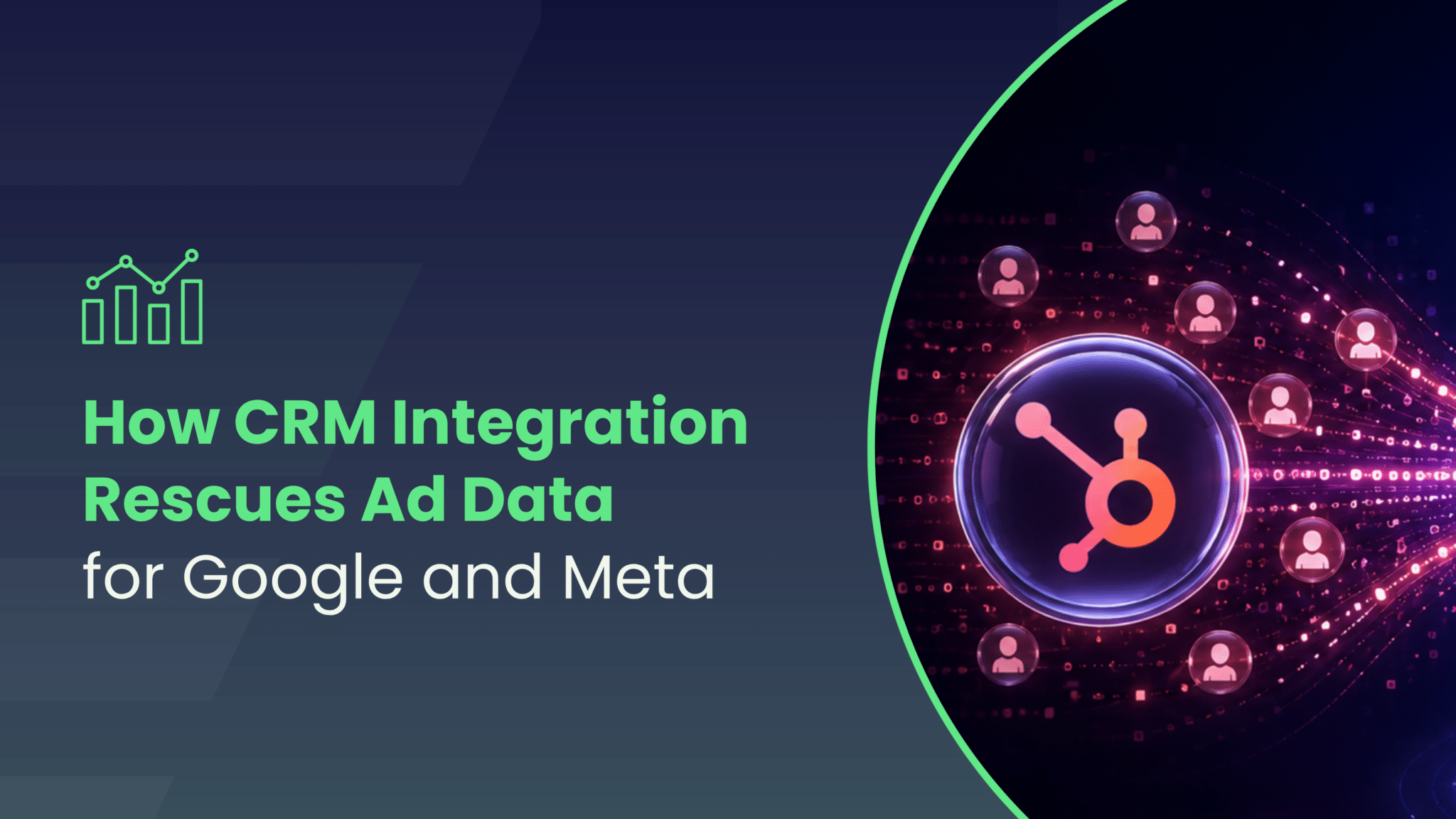
- A system for feeding that data to Meta. Your CRM is the richest source of targeting data you own, and most businesses never connect it to their ad account. Proper CRM integration is what makes this data usable rather than trapped in a spreadsheet.
Once you have that list, build a detailed audience matched to your ICP and a lookalike audience built from the CRM data.
Why the Lookalike Audience Percentage Matters More Than People Think
A 1% lookalike finds the users who most closely resemble your seed list. Widen it to 5% or 10% and you gain reach, but dilute the match quality that made the lookalike valuable.
According to a study by AdEspresso, 1% lookalike audiences outperformed 10% lookalike audiences by 70% in cost per acquisition (CPA). The instinct to go broader for more volume works against you here.
Expect Cost Per Lead to Go Up. That Is the Point.
When you switch from automated targeting to detailed and lookalike audiences, Cost Per Lead usually rises, because you’re being more specific about who sees the ad. That scares business owners used to watching CPL as their scoreboard. It shouldn’t.
| Metric | What It Actually Tells You |
| CPL | How cheaply you filled the top of the funnel. Says nothing about quality. |
| CPA | What it actually cost you to win a paying customer. |
| ROAS | Revenue generated per dollar of ad spend. |
| ROI | Overall profitability, factoring in total cost. |
If a campaign generates 50 leads instead of 100, but more of those 50 convert, you’ve won. Chasing a cheap CPL at the expense of lead quality is one of the fastest ways to burn out a sales team.
The Blind Spot Top-Tier Advertisers Exploit
They never fully disregard automated audiences. They run first-party data as the priority, while A/B testing it against automated targeting, judging the result on CPA, ROAS, and ROI, never CPL.
Frequently Asked Questions
What is the best way to find professional audiences on social media?
Combine a detailed audience from a clear ICP with a tight, 1% lookalike audience sourced from CRM data.
Should I stop using Meta’s automated tools completely?
No. Run it alongside your first-party data audiences and compare on CPA/ROAS.
Why did my CPL go up after switching to a lookalike audience?
Because you narrowed the pool to genuine matches. Expected, and usually a good sign.