
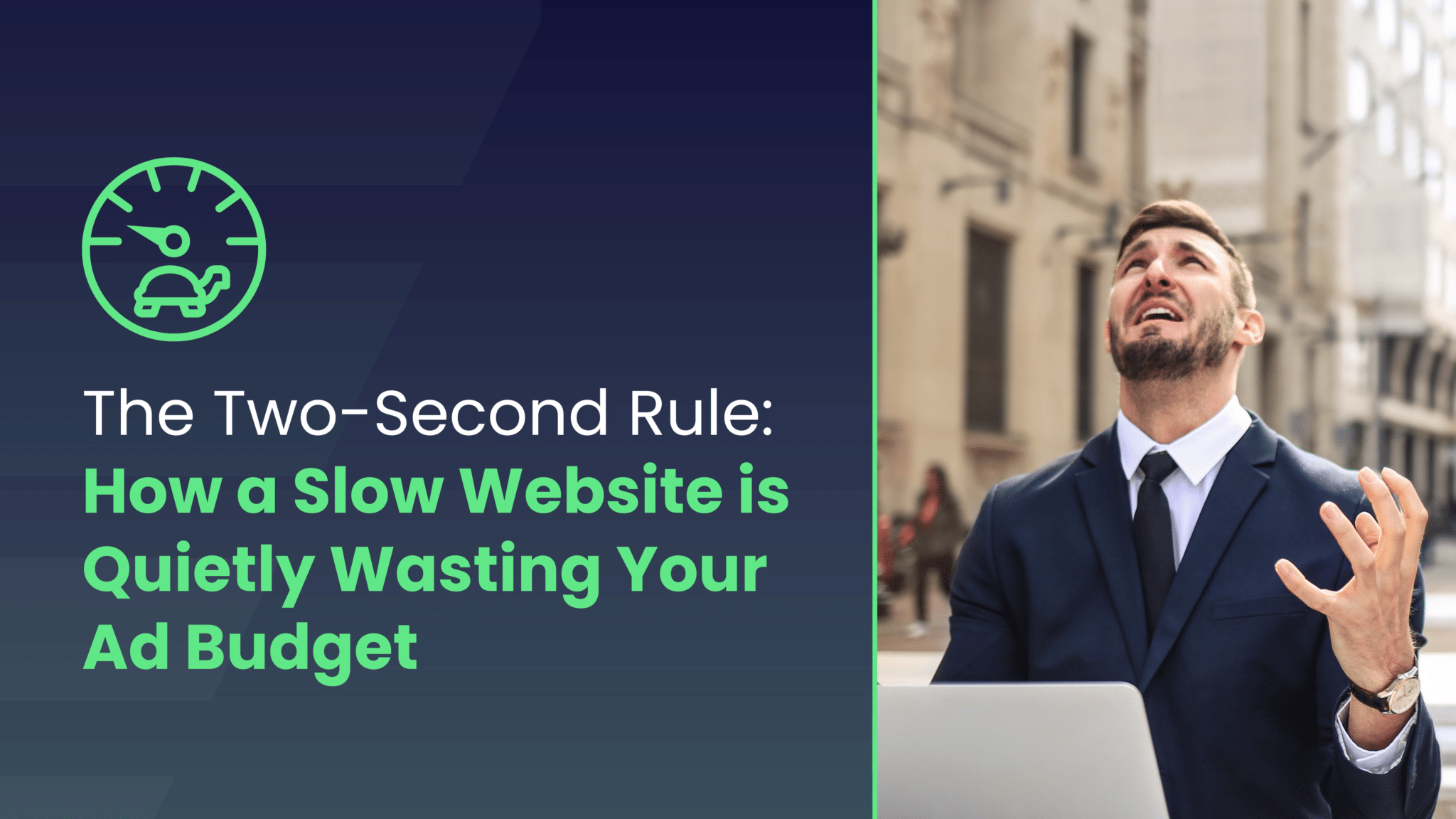
If your website takes longer than two seconds to load, you are essentially paying a “latency tax” on every dollar of your advertising budget, as nearly half of your potential customers will abandon the site before they even see your offer. This technical friction doesn’t just annoy users; it triggers a downward spiral of lower conversion rates, higher costs per click (CPC), and a fundamental loss of brand authority.
The Invisible Leak in Your Marketing Funnel
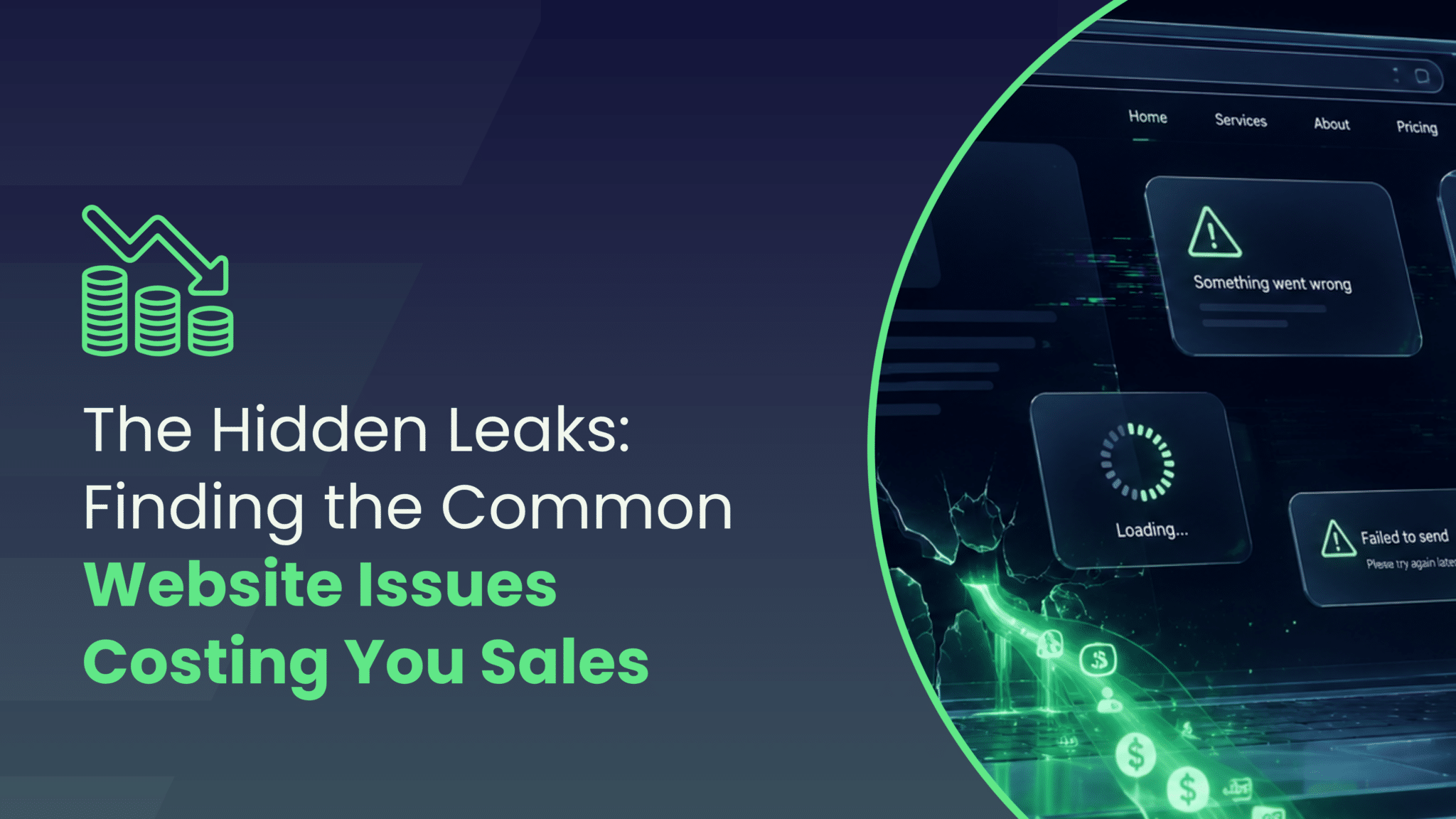
Most business leaders look at their ad dashboards to diagnose a failing campaign. They tweak the copy, swap the creative, or increase the bid. But if the “plumbing” of the website is clogged by slow load times, those adjustments are like trying to fill a bucket with a massive hole in the bottom.
When a site is slow, the first metric to suffer is the conversion rate. However, for a high-level executive, the more painful reality is the “Quality Score” penalty. Platforms like Google Ads evaluate your landing page experience as a core component of your ad rank. A slow site leads to a poor experience, which Google “punishes” by making you pay more than your competitors for the same click.
| Metric Impact | The Slow Site “Tax” | The Competitive Advantage |
| Average CPC | High (Penalty for poor UX) | Low (Reward for high Quality Score) |
| Bounce Rate | 50% or higher | 20% to 30% |
| Conversion Rate | Sub-1% | 3% to 5%+ |
| Brand Perception | “Unreliable” or “Outdated” | “Professional” and “Efficient” |
The Psychology of the Three-Second Exit
In the modern digital economy, speed is a proxy for competence. When a high-intent lead clicks an ad, they have a specific problem they want solved now.
If they are met with a white screen or a spinning loading icon for more than three seconds, a psychological shift occurs. They don’t just blame the internet connection; they subconsciously associate the delay with your ability to deliver on your core service. The logic is simple: if this company cannot manage its own digital storefront, how can they be trusted to handle my complex business needs?
The Blind Spot: Top-tier competitors aren’t just outspending you; they are out-performing you by ensuring their mobile load times are under 2.5 seconds, securing the “first-mover” advantage with every lead.
The “It Works on My Browser” Fallacy
One of the most dangerous phrases a business owner can hear from their technical team is, “It’s fine on my browser.”
This is a classic developer blind spot. Technical teams often test sites on high-end desktop machines with fiber-optic office internet. Your customers, however, are likely clicking your ads while on a 4G mobile connection in a coffee shop or between meetings.
A site that loads in 1 second on a developer’s MacBook can easily take 6 to 8 seconds on a mid-range mobile device. That discrepancy is where your ad budget goes to die.
How Search Engines “Tax” Your Inefficiency
Google Ads isn’t just a blind auction where the highest bidder wins. It is an efficiency auction. The algorithm prioritizes user satisfaction because if users click ads and have a bad experience (like a slow-loading page), they eventually stop clicking ads.
To protect their own revenue, Google calculates a Landing Page Experience score. If your site is slow:
- Your Quality Score drops.
- Your Ad Rank falls.
- You are forced to bid higher just to maintain the same position as a faster competitor.
Essentially, you are paying a premium for the privilege of providing a worse experience to your customers.
The Non-Negotiable Fix: Best-Practice Performance
If you suspect your site is burning through your budget, there is no room for “incremental” improvements. You must demand what is known as Core Web Vitals compliance from your team.
- Image Compression: Large, unoptimized images are the #1 cause of slow sites.
- Server Response Time: If your hosting is cheap, your site will be slow. Period.
- Code Bloat: Excessive scripts and “plug-ins” create a digital bottleneck.
The Strategy Shift
Business leaders should stop viewing website speed as a “technical task” and start viewing it as a financial lever. Improving your load time from 5 seconds to 2 seconds is often the single most effective way to double your lead flow without spending an extra cent on ad platforms.
The Compelling Reality
Research into web performance consistently shows that the stakes are higher than most realize. A site that loads in 1 second has a conversion rate 3x higher than a site that loads in 5 seconds. In the world of digital advertising, that is the difference between a campaign that scales and one that is shut down for being “unprofitable.”
Self Diagnosis: Your Two-Second Rule
Are your landing pages built for high-speed conversions, or are you paying a “latency tax” on every ad click? Use these five questions to determine if your website is burning your marketing budget.
5 Quick Questions:
-
- 🗹
Do you actively test your landing page load times on standard mobile connections, rather than just relying on high-speed office Wi-Fi?
- 🗹
Does your leadership team view website speed as a primary driver of Customer Acquisition Cost (CAC), rather than just an IT maintenance issue?
- 🗹
Do you regularly audit and compress your site’s assets and prune bloated third-party tracking scripts to ensure sub-two-second load times?
- 🗹Are you tracking how your landing page load times directly correlate to your Google Ads Quality Score and cost per click?
- 🗹If a high-level executive clicks your ad today, does your site load fast enough to signal immediate professional competence, rather than causing a frustrated bounce?
- 🗹
-
The Verdict:
- 4–5 “Yes” answers: You are a Speed Architect. You understand that performance is a brand differentiator. Your frictionless technical infrastructure allows you to capture market share at a significantly lower CPA than your competitors.
- 0–3 “Yes” answers: You are paying the Two-Second Tax. You are likely spending massive amounts of money to generate clicks, only to lose those high-intent buyers to the “invisible churn” of a slow, bloated website.