
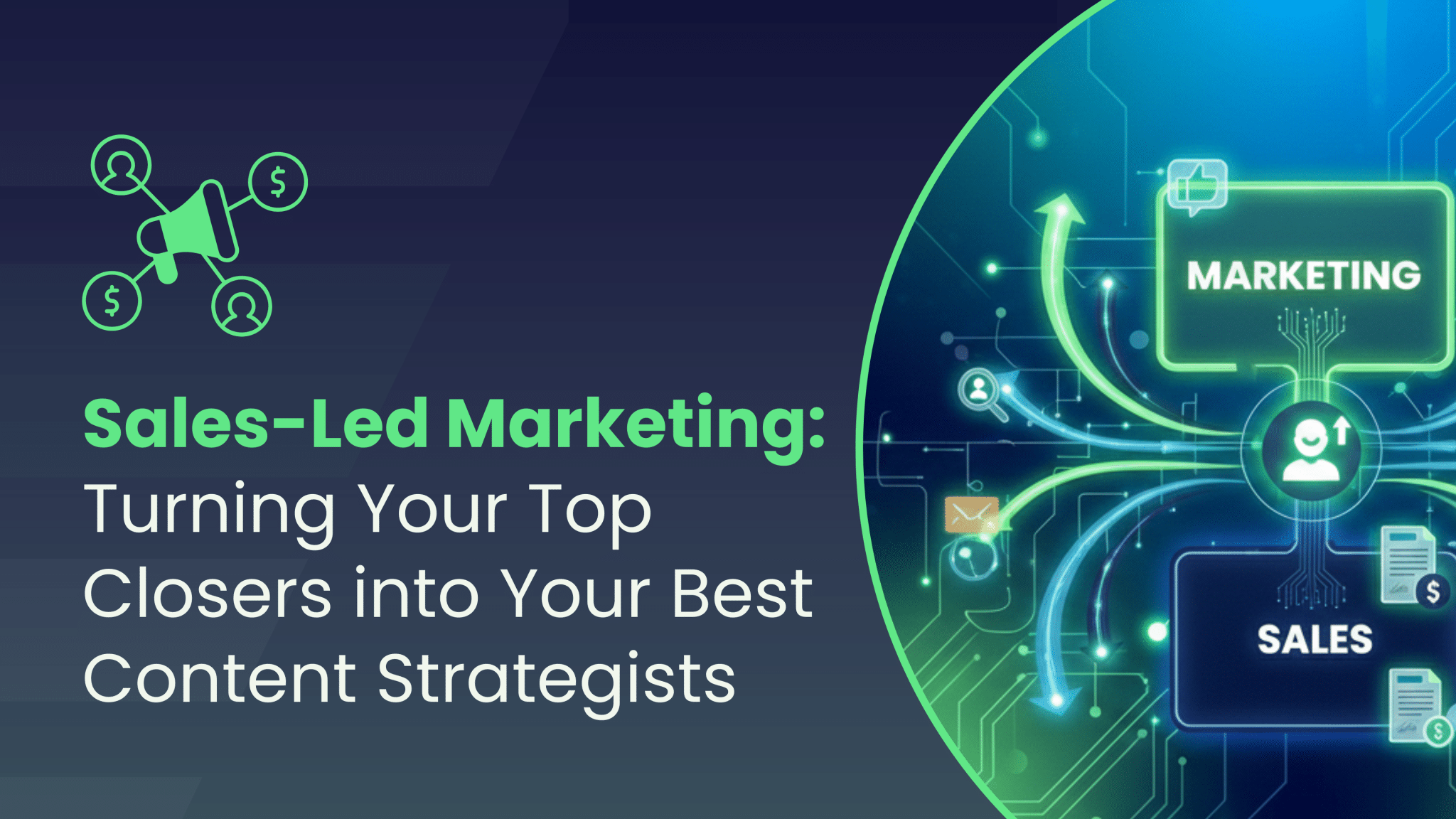
Sales teams help marketing create better leads by acting as the primary source of real-world buyer friction and intent data. When marketing departments interview top closers to extract specific prospect pain points, they transition from guessing at personas to creating high-intent content. This alignment ensures that marketing resources address the exact questions that move deals through the pipeline.
The Cost of the Departmental Silo
Most B2B organizations operate with a fundamental structural flaw. Marketing sits in a vacuum, designing campaigns based on theoretical buyer journeys and keyword volume. Meanwhile, Sales sits on the front lines, hearing the raw, unedited objections and anxieties of the actual market.
When these two departments fail to collaborate, the result is a “blame cycle.” Marketing complains that Sales cannot close the leads provided. Sales complains that the leads are “trash” and lack intent. This friction is not a personnel problem; it is a data-flow problem. The most successful organizations today treat their sales team as their most valuable research and development arm for marketing.
Extracting the Gold: The SME Interview Process
One of the greatest fears a CEO has is the idea of taking a high-performing closer off the phones to write a blog post. This is a valid concern. You do not pay a top-tier sales professional to be a copywriter. However, you should pay them to be a Subject Matter Expert (SME).
The most efficient way to turn sales insights into marketing power is the “Interview Extraction” method. Instead of asking a rep to write, the marketing team should book a standing 30-minute block each week. During this session, the marketer records the conversation and probes for specific details:
- What was the one question that almost killed a deal this week?
- Which competitor is being mentioned most often in the discovery phase?
- What is the “lightbulb moment” where a prospect finally understands our value?
By transcribing these recordings, marketing gains a library of authentic, high-authority insights. They can then repurpose this data into articles, white papers, and social content that sounds exactly like a seasoned pro speaking to a peer.
The Sales-Led Lead Magnet: A Secret Weapon
Most marketing teams create lead magnets based on broad industry trends. While these might generate a high volume of downloads, they often attract “lookie-loos” rather than buyers.
A sales-led lead magnet is different. It is built specifically to address the common questions that arise throughout the prospecting process. These are the “hidden” hurdles that only a sales rep would know. For example, if your sales team consistently hears concerns about implementation timelines or specific software integrations, the marketing team should build a “Pre-Implementation Checklist” or an “Integration Compatibility Map.”
When you offer a resource that solves a specific pain point encountered mid-funnel, you attract leads with much higher intent. You are no longer just capturing an email address; you are identifying someone who is actively trying to solve a problem that your product handles.
The Competitive Blind Spot: Real-Time Data Feedback
Top-tier competitors are not just “talking” more; they are using technology to automate the feedback loop. While average companies review their lead quality once a month, industry leaders are feeding sales data back to marketing channels in real-time.
Modern CRM automations allow you to kick data back to marketing platforms with key attribution. When a sales rep marks a lead as “Qualified” or “Closed-Won,” that signal should immediately inform the marketing algorithms. This creates a “lookalike” effect where your paid advertising spend is automatically optimized to find more people who look like your best customers, rather than just more people who click on ads.
If your marketing team does not know which specific ads led to a signed contract, they are effectively flying blind. Your competitors are likely already using this data to outbid you for the highest-value prospects.
Overcoming the Cultural Hurdle
The biggest barrier to this shift is rarely technical. It is cultural. Sales teams are often protective of their time and skeptical of marketing’s utility. To bridge this gap, leadership must lead with education and data.
Show the sales team the conversion rates. When marketing creates content based on sales input, the leads that come in are easier to close. They are more informed, they have fewer objections, and they move through the pipeline faster. When a rep realizes that spending 30 minutes a week with marketing will actually make their quota easier to hit, the resistance vanishes.
The New Standard of Authority
In an era of AI-generated fluff, authority is the only currency that matters. Your sales team holds the keys to that authority. By syncing these two departments, you turn your top closers into your best content strategists. You stop guessing what the market wants and start answering what the market is actually asking.