
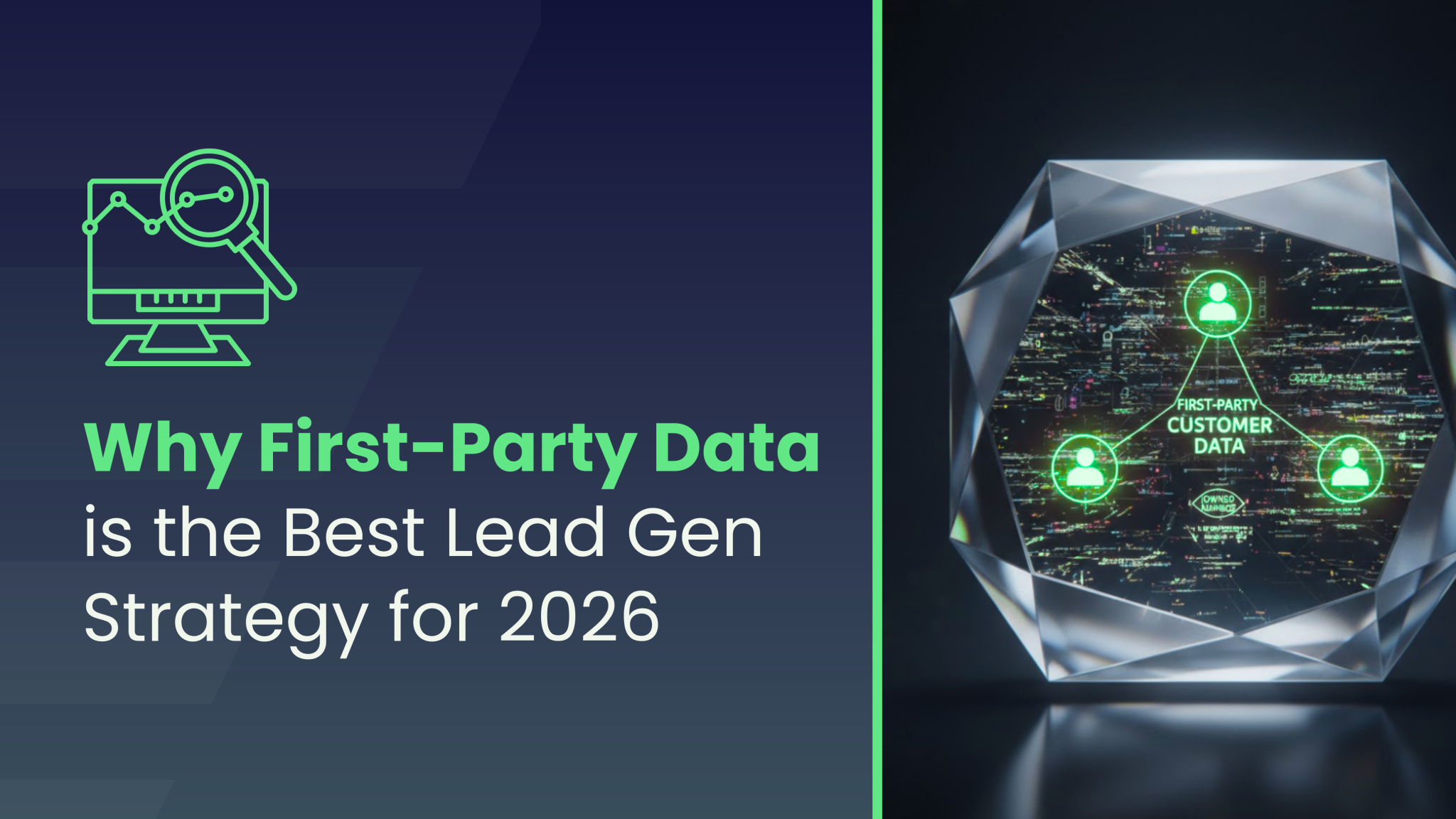
Owning your customer data is the only way to protect your business from the 2026 “Consent Trap” and AI data decay. By moving away from “rented” audiences on social media and toward your own data assets, you stop relying on unpredictable algorithms. This shift cuts out “digital litter” and trains AI to find real buyers instead of people who just scroll and click.
The Death of the “Rented” Lead
For the last ten years, business leaders have felt safe. If their LinkedIn or Meta ads were “working,” they thought their strategy was a winner. But in 2026, that has changed. We have hit the wall of AI-Driven Data Decay. Privacy rules are tighter, and the “Consent Trap” is closing. The data loops these platforms need to find your customers are breaking.
When you rely 100% on a platform’s pixel to find your customers, you aren’t building a business: you are renting a crowd. The moment the platform changes its terms or the data signal fades, your pipeline doesn’t just slow down; it disappears.
The Friction Paradox: Why “Easy” is Expensive
Most frustrated CEOs instruct their marketing teams to remove every possible barrier to entry. They demand the shortest forms and the least amount of friction possible. In the current landscape, this pursuit of “efficiency” is a strategic mistake.
When you make it too easy to convert, the AI at Meta and LinkedIn optimizes for the path of least resistance. It starts hunting for click-happy bots and low-intent scrollers because they are the “cheapest” data points available to satisfy the algorithm. You end up buying Digital Litter.
The Strategic Pivot
By adding “strategic friction” (like a qualifying quiz or a smart survey) you fix two major problems:
- No More “Ghost” Lead: Your sales team stops wasting 80% of their time chasing leads who have zero intent to buy.
- Algorithm Training: You send a higher-quality signal back to the ad platform. You are effectively telling the algorithm: “Stop finding people who just click; find people who provide these specific, high-value answers.”
Your conversion rate might look lower, but your ROI will be much higher. You are no longer paying for volume; you are paying for intent.
Avoiding the “Data Hoarding” Delay
Many companies are now trying to collect their own data through quizzes, but they are making a huge mistake: The Data Hoarding Delay.
Nothing kills brand trust faster than asking a prospect 10 deep, targeted questions and then hitting them with a “Enter your email to see results” wall. It makes the user feel cheated. They put in the work; you hoarded the value. If the user spends two minutes answering your questions only to be met with a lead gate, they won’t just leave – they’ll remember you as the brand that wasted their time.
The Fix: The “Micro-Win”
To build a sustainable first-party data engine, you must provide an immediate, fair value exchange.
- The Instant Result: Give them a “Micro-Win” immediately. If they take a test, show them their score the second they hit submit.
- The Deep Dive: After you give them that instant value, ask for their email to send the full, 10-page report.
This builds a relationship based on trust instead of a digital hostage situation.
The High-Leverage Move for 2026
If you realize today that your growth is 100% dependent on “rented” audiences, you are in a dangerous position. Your competitors are already building “data moats” that you cannot buy your way into later.
The best move you can make today isn’t to spend more on ads. It is to build a data tool that you own (like a calculator or a diagnostic tool on your own website). Start owning the relationship. Start training the AI on your terms. Stop buying litter and start building an asset.
Self Diagnosis: Your First-Party Data Strategy
If you rely 100% on a platform’s pixel to find your customers, you aren’t building a business; you are renting a crowd. Use these five questions to determine if you are building an asset you own or just paying a “tax” to Big Tech.
The Questions:
-
- 🗹
If your LinkedIn or Meta ad account was disabled tomorrow, do you have a way to reach your target audience directly without starting from zero? - 🗹
Are you collecting specific data points from your leads (like budget or timeline) that you can use to build “Lookalike” audiences, or are you letting the algorithm guess who your buyer is? - 🗹
When a prospect engages with your website, do they get an immediate “Micro-Win” or insight, or do you force them behind an email gate immediately? - 🗹
Do you have a “Data Moat” of unique insights about your industry that your competitors cannot simply buy their way into with a higher ad budget? - 🗹
Are you currently training your own AI (via CRM data) on what a “Closed-Won” deal looks like, or are you just training Meta to find more “Clicks”?
- 🗹
The Verdict:
- 4–5 “Yes” answers: You are an Owner. You are building a first-party data engine that will protect your growth regardless of algorithm changes or privacy laws.
- 0–3 “Yes” answers: You are a Tenant. You are renting your audience from Big Tech, and you are vulnerable to “rent hikes” and data decay that could collapse your pipeline overnight.